






Portugal

Member since:
2004
Website
CEO
Address
Rua do Douro 92, Rebelva, 2785-806,
São Domingos de Rana, Portugal
Services


Introduction
The Portuguese Music Research and Information Centre (mic.pt) is a public service initiative by Miso Music Portugal. Its mission is to research, preserve and disseminate Portuguese music from its beginnings to the present day, in Portugal and beyond. Mic.pt pays special attention to the work of contemporary Portuguese composers.
About
The Portuguese Music Research and Information Centre (mic.pt) was created and launched between 2001 and 2006 by the non-profit association Miso Music Portugal, situated at the heart of Portugal’s independent cultural sector. From the outset, mic.pt has prioritised cultivating strong relationships with composers, performers, musicologists, and organisations associated with contemporary classical music. Thanks to these connections, mic.pt makes a significant contribution to the global propagation of Portuguese musical culture.
At the heart of the Centre lies an extensive database containing information and materials on Portuguese music, as well as the mic.pt portal. The bilingual portal features pages dedicated to the work of composers and performers, providing access to materials and information and enabling navigation through the database. Mic.pt is regularly updated with information on works, composers, performers and Portuguese musical activity. Available materials include scores, audio and video recordings, images, texts, bibliographies, and discographies.
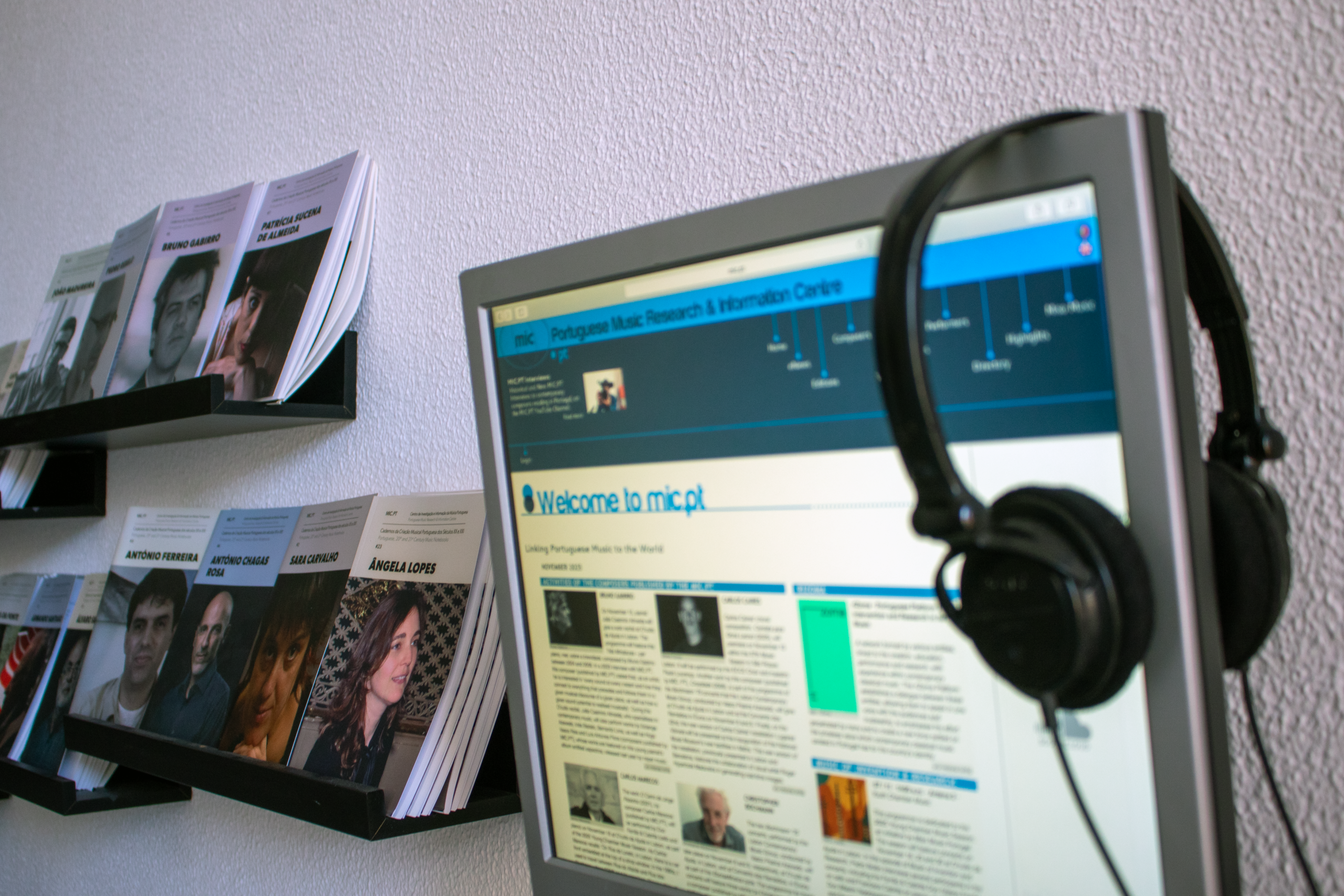
View of the mic.pt homepage on a screen, with headphones and the mic.pt Notebooks series in the background, photo: mic.pt
Services
The mic.pt main activities include:
- Cataloguing Portuguese music in the archive.
The mic.pt digital archive and database are constantly growing and being updated with new information, data, materials and documents. - Dissemination of Portuguese contemporary music via the mic.pt newsletter.
With a national and global reach, the newsletter is sent monthly to nearly 7,000 recipients and promoted on social networks. It is an essential tool for communicating information about the ‘daily life’ of the contemporary classical music scene in Portugal, including news about composers’ activities, competitions, new recordings, recent premieres, and updates regarding the mic.pt portal. - Audio and video interviews with composers.
First-person interviews with composers are conducted as part of the fortnightly Music of Invention and Research radio programme for RTP Antena 2 (Portuguese national radio broadcaster). The programme closely follows the liveliness, quality and diversity of musical creation in our times, and particularly in Portugal. The video versions of the interviews are published on the mic.pt YouTube channel. - Publishing and distribution of scores by Portuguese composers.
The strategy for mic.pt’s score edition and distribution via the online score catalogue is to make scores circulate among the general public, musicians, programmers, researchers, and students, thereby fostering knowledge of the music created in Portugal. - In Focus — bimonthly spotlight on a composer.
In Focus features on mic.pt include an article or interview, along with a playlist showcasing the featured composer’s music. - Edition of the series, Portuguese 20th- and 21st-Century Music Notebooks.
This bilingual series, available in digital and printed formats, offers insight into the work of composers, encouraging research and the discovery of their music and aesthetic reflections. - Dissemination of Portuguese music in the mic.pt agenda.
The agenda provides details of concerts and performances showcasing the works of 20th- and 21st-century composers based in Portugal. Other agenda sections cover meetings, conferences, competitions and courses/workshops/masterclasses. - Coordination of Espaço Crítica para a Nova Música/New Music Review Lounge.
It is a hub for reflecting on contemporary music, aiming to encourage critical thinking about recent compositions and to address the scarcity of writing about new music, especially that created and performed in Portugal. - Organisation of Meetings on Music, Technology and Research.
Curated by Prof. Isabel Soveral (INET-md/DeCA, University of Aveiro), this mic.pt initiative provides a regular forum for debate. It seeks to foster the progress of music creation, interpretation, theory and technology. The meetings prioritise topics related to contemporary music and technology. - Promotion of music by Portuguese composers on digital platforms: Facebook and Instagram.
Have a look at the website to view all information they have to offer about Portuguese music life.
Visit the website

Recent Publications
This is a selection of Publications
- The series of “Portuguese 20th- and 21st-Century Music Notebooks”. Each notebook is dedicated to a different Portuguese composer and is available in both Portuguese and English. The following notebooks are currently available in printed and digital formats: #1 · Paulo Ferreira-Lopes; #2 · Sara Carvalho; #3 · António Ferreira; #4 · António Chagas Rosa; #5 · Bruno Gabirro; #7 · Patrícia Sucena de Almeida; #10 · Pedro Rebelo; #12 · João Madureira; #13 · António de Sousa Dias · #15 · Isabel Soveral; #16 · Tiago Cutileiro; #18 · João Castro Pinto; #20 · [ka’mi] · #21 · Álvaro Salazar; #23 · Ângela Lopes; #24 · Ângela da Ponte; #25 · Amílcar Vasques-Dias; #26 · Fátima Fonte.
- Scores of music by Portuguese composers. The aim of mic.pt’s score edition is to make the works of Portuguese composers available online and to promote Portuguese music among musicians, programmers and researchers. The mic.pt score catalogue currently contains over 1200 pieces of music: https://mic.pt/dispatcher?where=3&what=0&type=6&lang=en.
- “Zeca Afonso – Musical Studies for Two Cellos”. It is a digital publication developed between 2023 and 2025 by Pedro do Carmo, Lluïsa Paredes and Eva Aguilar, based on an idea by the cellist Paulo Gaio Lima. It brings together eleven arrangements of songs by José Afonso, covering contrasting periods and styles — from fado to African influences and experimentation. Each arrangement is a Musical Study that translates the expressive, ethical and poetic dimensions of his work for the cello. More than a tribute, this edition is a pedagogical and interpretive tool, linking tradition and historical awareness with contemporary practice and bringing José Afonso’s legacy closer to the world of the cello today. “Zeca Afonso – Musical Studies for Two Cellos” is available via the following link: https://mic.pt/dispatcher?where=4&what=2&show=4&edicao_id=11735&lang=en.
- Reviews on the Espaço Crítica para a Nova Música/New Music Review Lounge: https://www.mic.pt/critica/home_en.html. It is an open forum for uncompromising opinions, tastes and new tendencies in music, where these can be explored in both breadth and depth.
- The ISCM World New Music Magazine 2025, with focus on Portuguese 20th- and 21st-century music: https://iscm.org/magazine/world-new-music-magazine-31-portugal-2025.
- In Focus — bimonthly spotlight on a composer, including an article or interview, along with a playlist showcasing the featured composer’s music. The mic.pt In Focus archive: https://www.mic.pt/editaveis/adds/EmFocos/Em_Foco-mic_pt-arquivo.html.
Insights into our work

View of the mic.pt composers list on a screen, with hands on a keyboard and three mic.pt Notebooks on a shelf, photo: mic.pt
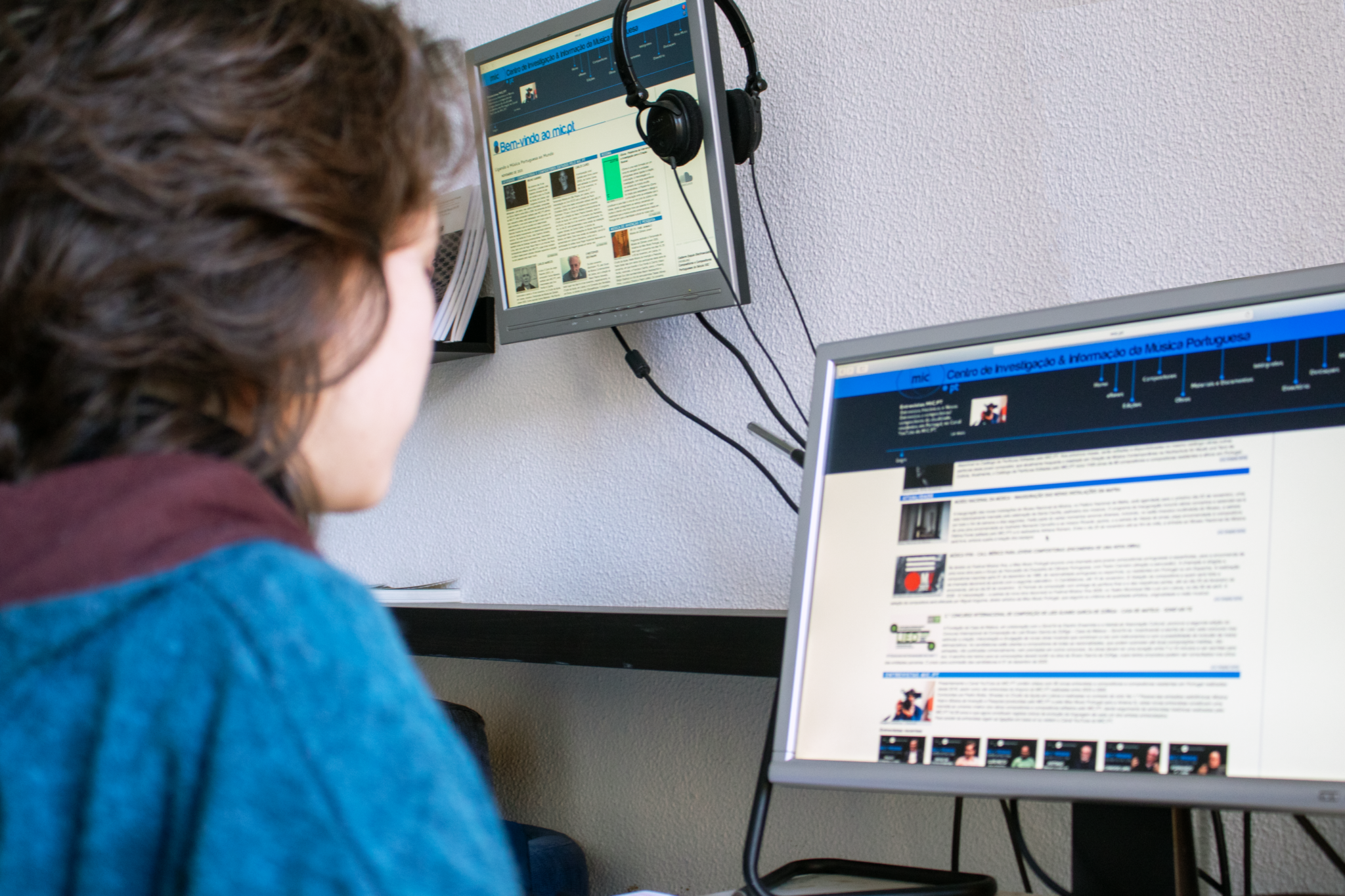
View of a person browsing the mic.pt homepage, photo: mic.pt
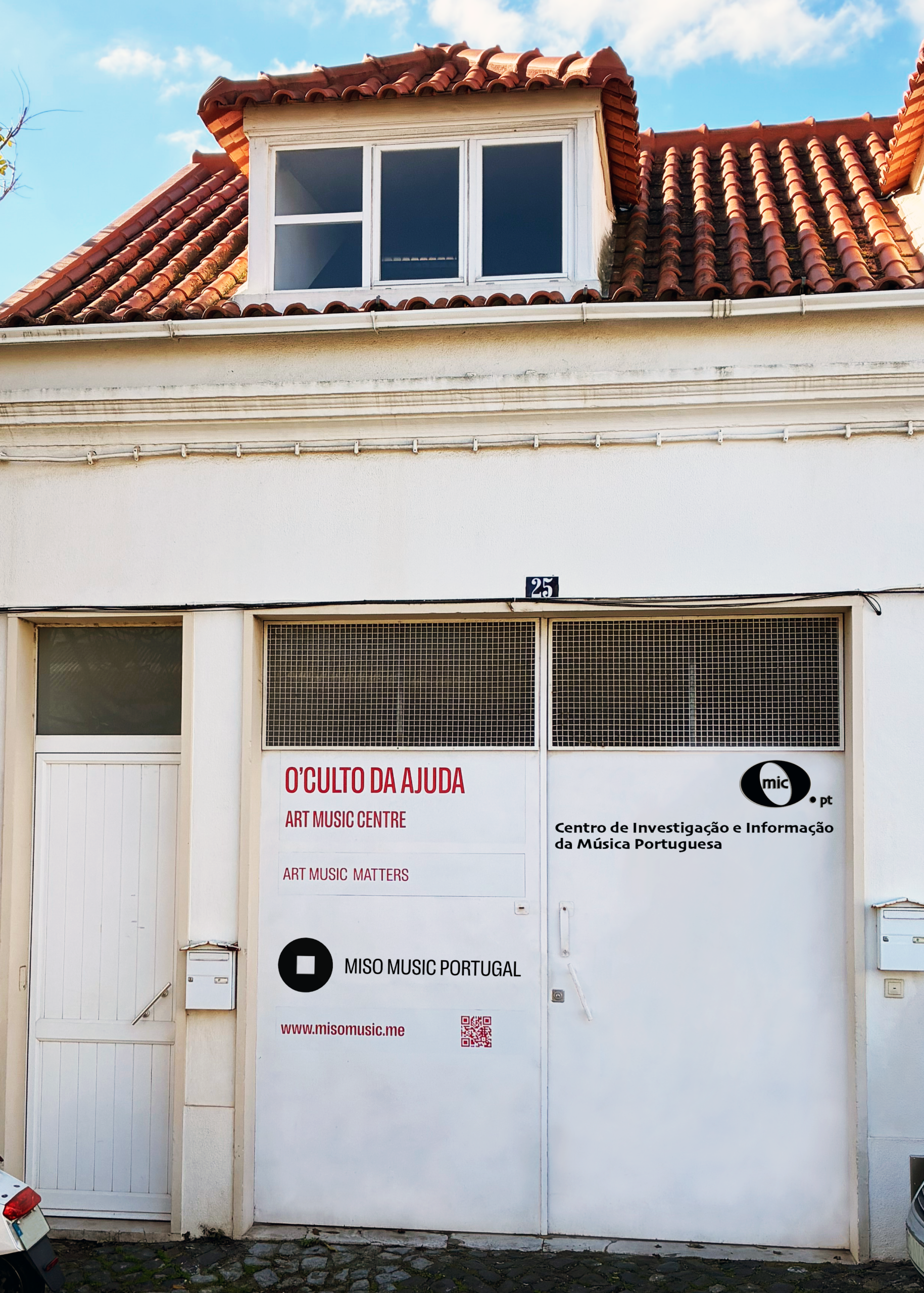
View of the entrance to O’culto da Ajuda in Lisbon – Miso Music Portugal and mic.pt hub and concert hall, photo: mic.pt
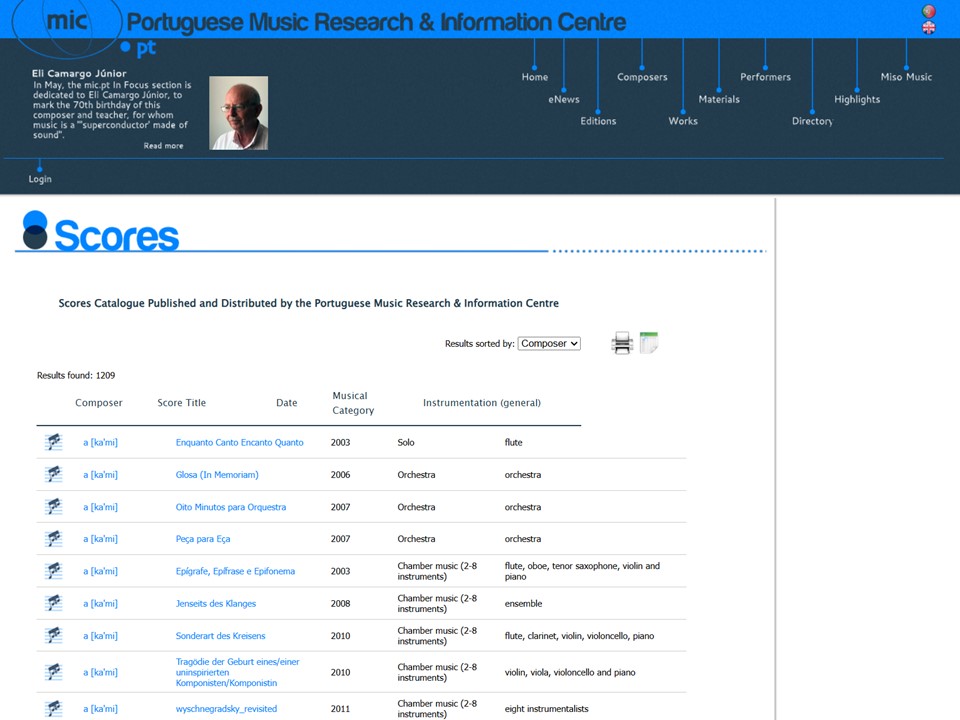
View on the beginning of the mic.pt score catalogue, photo: mic.pt
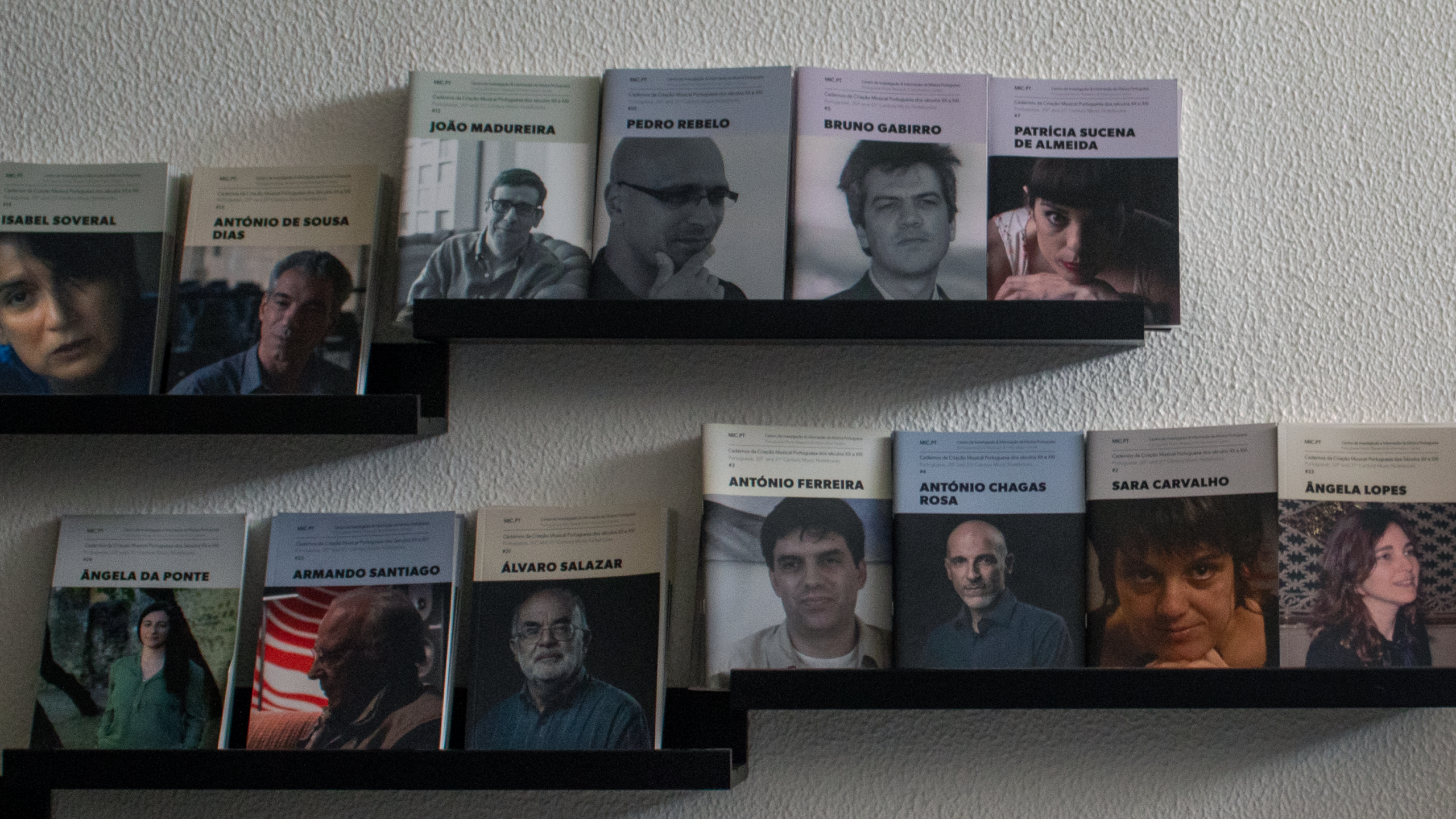
View on the covers of some of the mic.pt Notebooks dedicated to Portuguese composers, photo: mic.pt

Interview
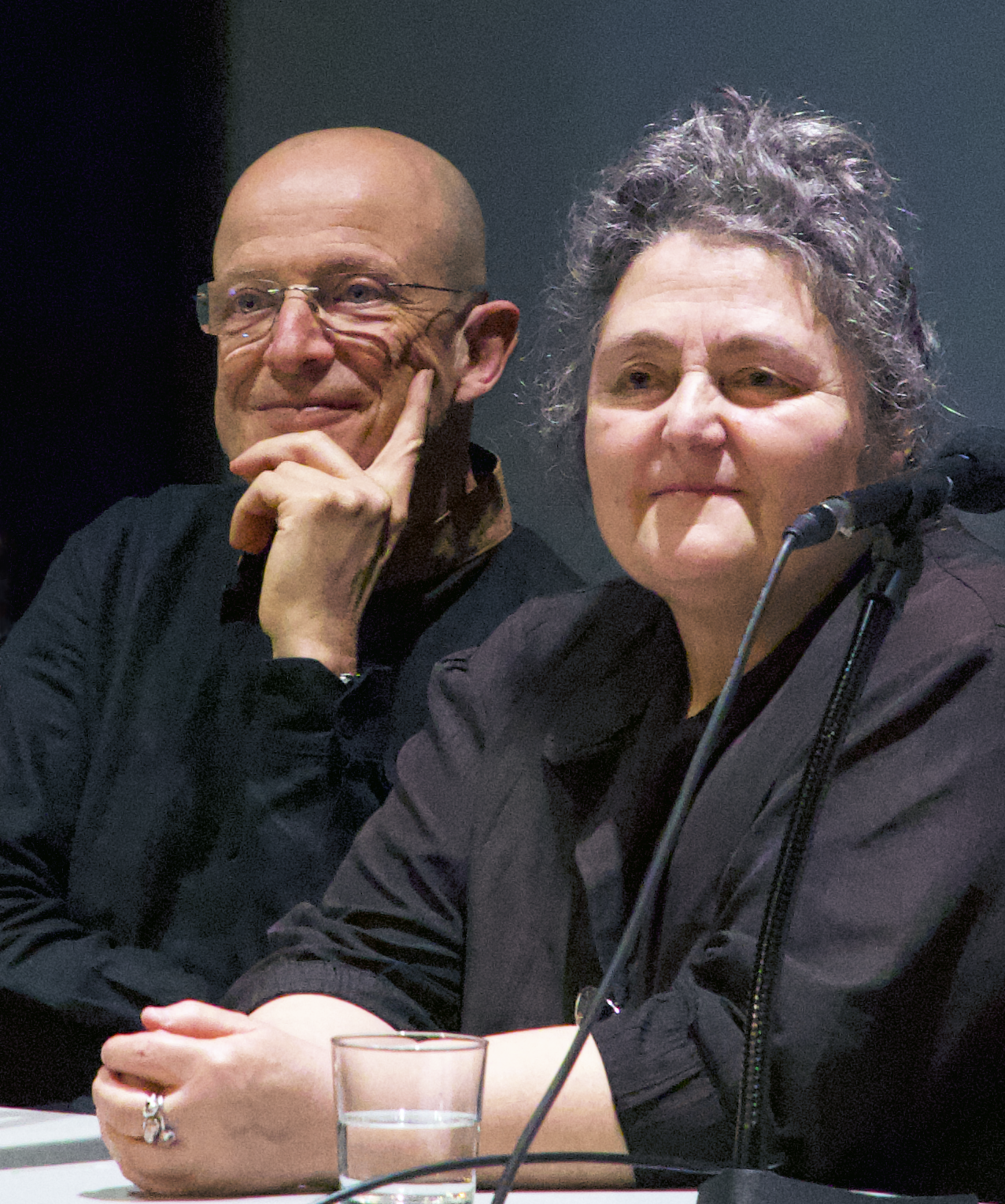
Miguel Azguime and Paula de Castro Guimarães
Miso Music Portugal – Artistic Director and Executive Director
Miguel Azguime – founder and artistic director, and Paula de Castro Guimarães – founder and executive director of Miso Music Portugal
For readers outside Portugal: How is musical life organised and structured?
Portugal has a rich and diverse musical scene, but it is organised through a relatively complex and sometimes fragile ecosystem. At the institutional level, a few major public structures provide important platforms for concerts, opera, education and professional training. These include the Teatro Nacional de São Carlos, the Orquestra Sinfónica Portuguesa, the Casa da Música, the CCB (Centro Cultural de Belém), regional orchestras, municipal theatres and higher music schools. Alongside these, there is a vibrant and very active independent sector comprising ensembles, festivals, associations, composers, performers, a few research centres, publishers, and small cultural organisations.
Public support for these structures is mainly channelled through DGArtes (the Portuguese Directorate-General for the Arts), which funds artistic creation, programming, touring, internationalisation, and sustained activity in areas including music and opera. Municipalities also play a decisive role, particularly through local theatres, cultural centres, festivals and community-based programmes. The Rede de Teatros e Cineteatros Portugueses (Portuguese Network of Theatres and Cine-theatres) has become increasingly important in decentralising artistic programming and encouraging circulation beyond Lisbon and Porto.
In practice, however, musical life in Portugal depends on a combination of public funding, municipal partnerships, private foundations — especially the Gulbenkian Foundation — some partnerships in European projects, and the resilience of independent artistic structures. While the sector is artistically dynamic, it often operates with limited resources, discontinuous funding, and a strong concentration of opportunities in the main urban centres.
For an international reader, we would describe Portuguese musical life as an ecosystem comprising public, municipal and independent elements, which is strongly sustained by individual initiative. The sector’s strength lies in the quality, diversity and creativity of its artists, but its main challenge remains the need for more stable, coherent and long-term cultural policies capable of supporting the vitality across the whole country.

Where does Miso Music Portugal fit into this structure?
Mic.pt is primarily part of Portugal’s independent cultural sector; it is an initiative of the non-profit cultural association Miso Music Portugal. Simultaneously, it fulfils a notable public service role as a national centre for the research, documentation, publishing and dissemination of Portuguese music, particularly focusing on composers and performers active in Portugal, with a specific emphasis on 20th- and 21st-century creation.
Distinctively, mic.pt also operates as a music publisher with a composer-centric approach: each composer sets their own terms for renting or selling their scores, and all revenues generated are returned to them in full. This model is still rare in the publishing landscape and reflects mic.pt’s broader ethos of serving the music community rather than extracting commercial value from it. Mic.pt also explicitly offers composers dedicated promotional support.
In an international context, mic.pt acts as Portugal’s music information centre within IAMIC. It also connects Portuguese music to wider international networks for documentation, promotion and exchange, including the EMC/IMC, ISCM, CIME and IETM. In this way, it serves as a national reference point for the international visibility and dissemination of Portuguese music.
Why is Miso Music Portugal relevant for national and international target groups?
• Who we serve — nationally and internationally.
At a national level, mic.pt primarily serves the community of Portuguese composers and performers, providing them with visibility, documentation and publishing support, as well as access to international networks. It also serves programmers, promoters, and cultural institutions across Portugal, offering a reliable and comprehensive point of reference for discovering repertoire, facilitating artistic collaboration, and providing contextualised information on Portuguese music. The Centre’s archives, database and publications benefit researchers, musicologists and educators, while the wider public gains free access to a continuously updated, living record of Portugal’s musical heritage.
At an international level, mic.pt serves foreign programmers, festival curators, ensembles, researchers and publishers who are interested in discovering, studying and performing Portuguese music. The portal provides scores, recordings, biographies and contextual information in Portuguese and English. It also serves fellow IAMIC members and other partner networks, acting as Portugal’s reference point within the international music information ecosystem and contributing to the visibility, exchange and cross-border collaboration around Portuguese music.
• How our services support these groups.
Mic.pt offers composers and performers the opportunity to catalogue, archive and publish their work online, as well as publish scores under terms that are entirely favourable to the creators. For programmers and curators, mic.pt is a one-stop resource for discovering the Portuguese repertoire. Works can be searched for within the database by instrumentation, duration, composition date and many other parameters. The Centre provides researchers and educators with a structured database, critical reviews, interviews and multimedia materials. For international partners, mic.pt ensures that Portuguese music is consistently represented and accessible within the global networks that shape contemporary music programming worldwide.

